

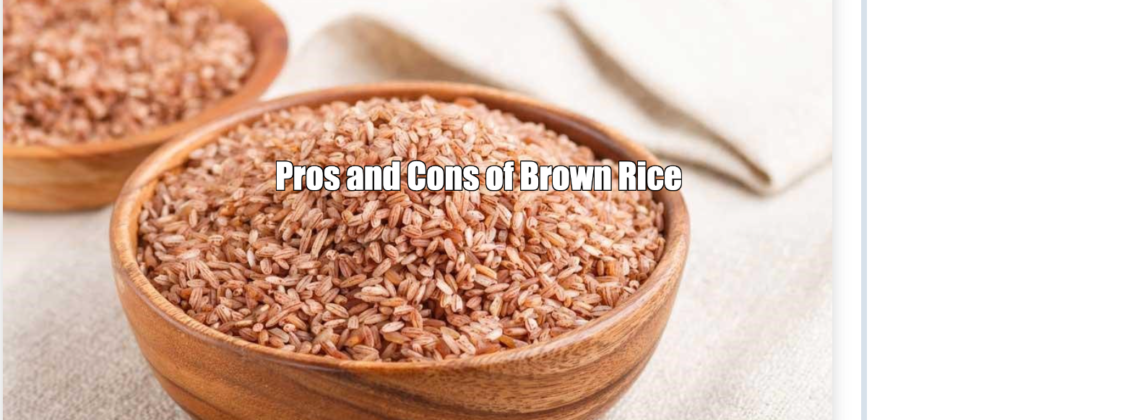
Pros and Cons of Brown Rice
Summary
Brown rice is whole grain rice that keeps its bran and germ layers. It looks light brown and tastes slightly nutty and chewy. Compared to white rice, it has more fiber, vitamins, and minerals. These nutrients help digestion, energy, and heart health. Brown rice takes longer to cook, but many people enjoy it as a filling, healthy side dish or base for bowls and stir-fries in many different everyday meals.
Brown rice is often seen as the “healthier” cousin of white rice, but like any food, it has both good and bad sides. Understanding the pros and cons of brown rice can help you decide if it fits your body, taste, and lifestyle.
Below is a simple, human‑style breakdown of the benefits, drawbacks, advantages, and disadvantages of eating brown rice regularly.
Quick Overview: Pros and Cons of Brown Rice
- Main advantages
- Higher in fiber
- More vitamins and minerals
- Better for blood sugar control (for many people)
- Main disadvantages
- Takes longer to cook
- Can be harder to digest for some
- May contain more arsenic than white rice
- Taste and texture are not for everyone
Comparison Table: Advantages and Disadvantages of Brown Rice
| Aspect | Advantage / Benefit | Disadvantage / Drawback |
|---|---|---|
| Fiber | High fiber supports digestion and fullness | Too much fiber may cause gas or bloating for some people |
| Blood sugar | Lower glycemic index than white rice | Portion control is still needed for people with diabetes |
| Nutrients | More magnesium, B vitamins, and antioxidants | Some nutrients can be harder to absorb due to “antinutrients” |
| Heart health | May support heart health due to fiber and nutrients | Benefit depends on full diet, not rice alone |
| Cooking time | — | Longer cooking time and more effort |
| Taste & texture | Nutty flavor, chewy texture many people enjoy | Others find it too chewy, dry, or “heavy” |
| Shelf life | More natural oils, less processed | Oils can go rancid faster than in white rice |
| Arsenic content | — | Often higher arsenic than white rice if eaten in large amounts |
The Benefits and Advantages of Brown Rice
Let’s look at the benefits in a bit more detail.
1. Higher Fiber Content
One of the biggest advantages of brown rice is its fiber.
- Brown rice keeps the outer bran layer, which is rich in fiber.
- Fiber helps:
- Keep you full for longer
- Support smooth digestion
- Reduce spikes in blood sugar
If you are trying to manage weight or avoid overeating, this can be a big plus. Feeling full means you may naturally eat less.
2. More Nutrients Than White Rice
Because brown rice is less processed, it keeps more natural nutrients. It usually has more:
- Magnesium
- B vitamins (like B1, B3, B6)
- Antioxidants in the bran and germ
These nutrients support energy levels, nerve function, and general health. This is a clear benefit and advantage compared with white rice, which has had the bran and germ removed.
3. Better for Blood Sugar (for Many People)
Brown rice has a lower glycemic index than white rice. This means:
- It raises blood sugar more slowly
- It may help people who are watching their blood sugar levels
- It can be a better option for people with insulin resistance when eaten in controlled portions
Of course, this does not mean brown rice is sugar‑free. It is still a source of carbohydrates. But as part of a balanced meal with veggies, protein, and healthy fats, it can be a smarter choice than refined grains.
4. May Support Heart and Gut Health
Thanks to its fiber and nutrient content, regular brown rice intake may:
- Support heart health by helping with cholesterol levels
- Feed good gut bacteria (because of its fiber)
- Help prevent constipation
These are long‑term benefits, especially if you replace some white rice or very processed foods with brown rice.
The Drawbacks and Disadvantages of Brown Rice
Now let’s talk about the drawbacks and disadvantages of brown rice. These are real issues you should know before you switch completely.
1. Longer Cooking Time and More Effort
Brown rice:
- Takes longer to cook (often 35–50 minutes)
- May need soaking for better texture
- Requires more water and attention
If you are busy or want fast meals, this is a clear disadvantage. Many people go back to white rice simply because it is quicker and easier.
2. Harder to Digest for Some People
Because of its high fiber and intact bran, brown rice can be:
- Heavy on the stomach for people with sensitive digestion
- A cause of gas, bloating, or discomfort if you are not used to fiber
People with irritable bowel syndrome (IBS), certain gut issues, or after surgery may do better with softer, low‑fiber foods like white rice. In these cases, the pros and cons of brown rice change a lot, and brown rice might not be the best daily choice.
3. Arsenic and Antinutrients
Two often‑ignored drawbacks:
- Arsenic: Rice can absorb arsenic from soil and water, and brown rice often has more arsenic than white rice because it keeps the outer layers.
- Antinutrients: Brown rice contains phytic acid, which can reduce the absorption of minerals like iron and zinc.
For most people eating brown rice in moderation, this is not a major danger. But if you eat rice every day (especially children or pregnant people), it may be wise to:
- Vary your grains (quinoa, oats, barley, buckwheat, etc.)
- Rinse rice well and cook it in extra water, then drain
4. Taste and Texture Are Not for Everyone
Some people love the nutty flavor and chewiness of brown rice. Others really don’t.
Common complaints:
- “It’s too chewy.”
- “It feels heavy.”
- “My kids won’t eat it.”
If your family hates it, forcing everyone to eat brown rice can harm long‑term healthy eating habits. In that case, mixing half brown, half white rice can be a good compromise.
So, Should You Eat Brown Rice?
When you look at the pros and cons of brown rice, a few simple points stand out:
Brown rice may be a good choice if:
- You want more fiber and nutrients
- You enjoy a nutty flavor and chewy texture
- You are okay with longer cooking times
- Your digestion handles fiber well
Brown rice may not be ideal if:
- You have a very sensitive gut
- You rely on quick‑cook meals
- You or your child eat huge amounts of rice every day
- You strongly dislike the taste or texture
In the end, brown rice is not a magic health food, and white rice is not “poison.” Both can fit into a healthy diet. The key is balance, variety, and listening to your own body.
Note: This article is for general information only and is not medical advice. If you have health conditions (like diabetes or digestive diseases), talk to a doctor or dietitian before making big changes to your diet.